
Thinking about selling meat across state lines? Start with CIS readiness.
For qualifying state-inspected meat processors, the Cooperative Interstate Shipment program can provide a path into interstate commerce.
Understand where CIS is available, what the program requires, and what your plant should verify before moving forward.
Current Update
September 2026: The September 4 executive order directs USDA to streamline participation in CIS and other cooperative inspection programs, provide more technical assistance to small processors, and identify remaining barriers to interstate market access.
It starts additional federal work. It does not remove the inspection requirements that apply today.
State inspection and CIS are not the same thing
State Meat and Poultry Inspection programs operate under cooperative agreements with USDA FSIS. Product produced under ordinary state inspection is generally limited to commerce within that state.
The Cooperative Interstate Shipment program creates an additional pathway. Qualifying state-inspected establishments in participating states can be selected for CIS and ship eligible inspected products in interstate commerce.
Having a state Meat and Poultry Inspection program does not automatically mean CIS is available. The state must also have a CIS agreement with FSIS.
For broader state regulatory information, use Cleavr’s meat processing regulations by state resource.
CIS participating states (11)
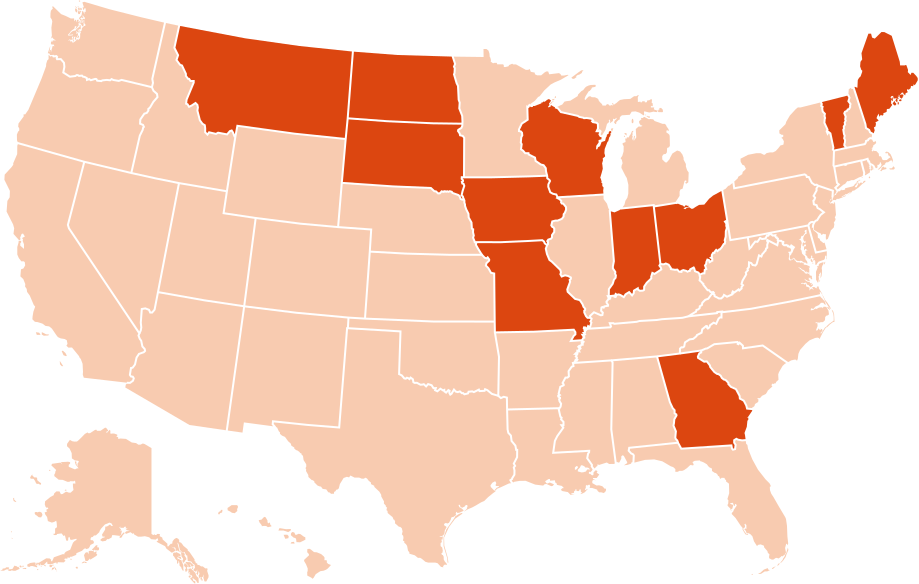
Georgia · Indiana · Iowa · Maine · Missouri · Montana · North Dakota · Ohio · South Dakota · Vermont · Wisconsin
Could CIS apply to your plant?
There are a few basic questions to answer before getting deep into records, labels, or operating procedures.
Does your state participate in CIS?
Your state needs more than its own inspection program. It must also have a CIS agreement with FSIS.
As of September 2026, 11 states participate.
Are you operating under state inspection?
CIS is designed for qualifying establishments operating under a cooperative state Meat and Poultry Inspection program.
If you are custom exempt, federally inspected, or unsure of your current status, your path to interstate commerce may be different.
Does your establishment meet the employee limit?
CIS generally requires participating meat establishments to average no more than 25 employees under federal counting rules.
If you’re close to the limit, confirm how employees are counted with your state inspection program.
Meeting these starting conditions does not mean your plant is approved for CIS.
Applications go through the state inspection program. The state evaluates the establishment and, when appropriate, recommends it to FSIS for selection.
Eligibility is only the starting point
Once a plant moves into the CIS process, the requirements go well beyond headcount.
A selected establishment must meet applicable federal requirements while participating in CIS. Depending on the operation, the selection and oversight process includes requirements involving:
- Food-safety systems and appropriate facility standards
- Federal sanitation performance standards
- Approved water and sewage systems
- Written Sanitation Standard Operating Procedures
- A Hazard Analysis and Critical Control Point plan that meets applicable federal requirements
- Federal labeling requirements, including FSIS review when a label is not eligible for generic approval
- Recall procedures and related records
- Records available for inspection and oversight
If a selected establishment also conducts ordinary state-inspected operations, federal rules require written procedures for complete separation by time or space.
The exact application, preparation, and approval process runs through your state inspection program and FSIS.
Software does not replace any of these requirements.
Meeting the rule and managing the work are two different things
CIS does not require a processor to use a particular software platform.
But additional markets can mean more orders, more production information, more labels, more product movement, and more records to keep straight. Before building around that growth, look at how reliably information moves through your plant today.

Traceability
Can your team follow an animal, product, and order through processing without rebuilding the history from separate sheets, spreadsheets, and employee memory?

Records
If someone needs the history behind an order or production step, can your team find it quickly without searching through several systems or filing cabinets?

Label info
Does the information needed for labels come from a reliable record, or does someone have to rewrite or re-enter it at another step?

Product ID
If different inspected operations move through the same facility, can employees clearly identify what belongs to each operation while following separation procedures?

Handoffs
When work moves from intake to production, packaging, freezer storage, billing, and pickup, does the information move with it?
These are operational questions, not separate CIS requirements. They are also where a plant can create unnecessary work for itself as volume and complexity increases.
That same issue applies to expansion more broadly. Adding capacity only helps when the workflow carrying the work can keep up.
Keep the operational record connected
Cleavr is purpose-built for meat processors and keeps information connected from intake to invoice.
It does not determine whether your plant qualifies for CIS. It does not write or approve your HACCP plan. And it does not replace your state inspection program or USDA FSIS.
What Cleavr can do is help make the operational information behind the work easier to maintain, follow, and retrieve.
Keep an animal and order connected
Receiving, identification, order information, production activity, packaging, and freezer tracking can remain connected through the workflow.
Reduce information lost between handoffs
Digital order and cut information follows the work instead of depending on repeated transcription or employee memory.
Maintain consistent label information
Package labels can use information already connected to the order and production workflow, reducing unnecessary re-entry.
Maintain product identity
Product traceability, box tracking, and freezer locations help employees identify what belongs to each order.
Retrieve order history
Order activity stays connected to the customer, animal, product, and workflow rather than being spread across disconnected records.
Prepare for additional volume
Production and business visibility can help a plant understand how work is moving before taking on more of it.
See how Cleavr supports the work behind CIS readiness
If interstate growth is on your radar, start with the parts of the operation you can control today.
We can walk through how Cleavr handles records, traceability, product tracking, label information, and the handoffs that become harder to manage as your operation grows.
The conversation stays focused on your plant and your workflow. Regulatory eligibility and approval remain with your state inspection program and USDA FSIS.
Complete the form and our team will follow up to schedule your personalized walkthrough.
All fields are required unless marked optional.
Interstate Demo
Frequently asked questions
Does the September 4 executive order mean I can sell meat across state lines without inspection?
No. The order directs USDA to expand legitimate interstate market opportunities, streamline cooperative inspection programs, provide technical assistance, and examine remaining barriers.
It does not create a blanket exemption from inspection requirements. Commercial sales remain subject to the requirements that apply to the product and establishment.
After the related article publishes: add the link to the full September 4 breakdown here.
Is CIS available in every state with its own Meat and Poultry Inspection program?
No. A state must have a qualifying Meat and Poultry Inspection program and a separate CIS agreement with FSIS.
As of September 2026, 11 states participate in CIS: Georgia, Indiana, Iowa, Maine, Missouri, Montana, North Dakota, Ohio, South Dakota, Vermont, and Wisconsin.
Does my plant have to have fewer than 25 employees?
CIS generally requires an establishment to average no more than 25 employees under the counting rules in 9 CFR 332.3.
Those rules are more specific than simply counting everyone on payroll, and the total number of employees cannot exceed 35 at any one time. Confirm your count with your state program if you are near the limit.
Does Cleavr make my plant CIS compliant?
No. Cleavr supports operational workflows such as traceability, connected order information, product tracking, labels, and record retrieval. Your state inspection program and USDA FSIS determine CIS eligibility and regulatory compliance.
How long does it take to join CIS?
There is no single timeline that applies to every establishment.
Timing depends on your plant’s current status and readiness, your state’s process, and the issues identified during review. Your state Meat and Poultry Inspection program is the best source for its current process and expected timeline.
What if my state does not participate in CIS?
CIS may not currently be an available path for your plant.
Federal inspection may provide another route to interstate commerce depending on your operation. The September 4 executive order also directs USDA to increase participation in cooperative inspection programs, so program availability may change.
Confirm your options with your state inspection authority and USDA FSIS before making plans around interstate sales.
Last verified September 10, 2026.
This page summarizes publicly available USDA, FSIS, and federal regulatory information for general informational purposes. It is not legal, regulatory, inspection, or food-safety advice. Program availability and requirements can change. Confirm current requirements with your state Meat and Poultry Inspection program and USDA FSIS before acting.
Cleavr® is a registered trademark of Cleavr, Inc.